Freeing Families from Slavery
奴隷のためのクラウドファンディングは11月限定です。
是非応援してください!
Please support our crowdfunding project
パキスタンでは奴隷制度が法的には禁止されているにもかかわらず、彼らは「世代を超えた借金奴隷」となっています。
レンガ工場の所有者から、両親や祖父母、さらには曾祖父母が借りたわずかな金額によって縛られています。
レンガを作ることが、彼らにとって借金を返済する唯一の手段なのです。
工場の所有者は、彼らに賃金を支払いません。労働そのものが借金の返済とみなされています。
しかし、彼らは生活費や食費のために、再び所有者からお金を借りざるを得ず、借金は世代を超えて増え続けていきます。
子どもたちは学校に通うことができず、家族全体が教育を受けられないまま、借金の牢獄から抜け出せません。
文字を読めないために契約書の内容も理解できず、自分たちがどれほど高い利息を課されているのかさえ分からないのです。
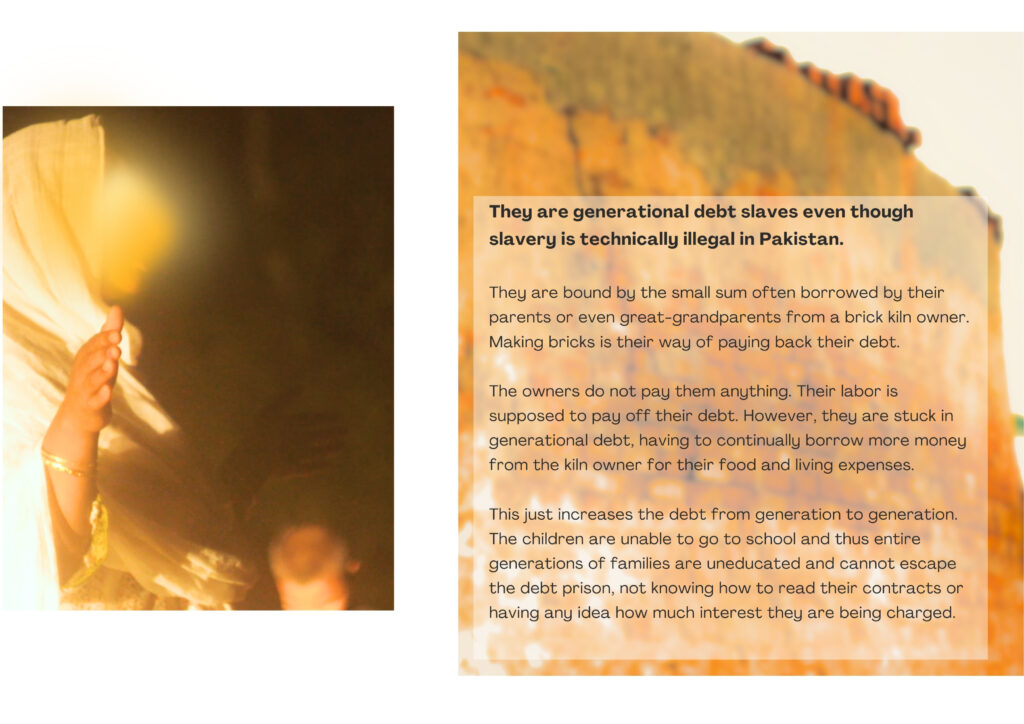
They are generational debt slaves even though slavery is technically illegal in Pakistan.
They are bound by the small sum often borrowed by their parents or even great-grandparents from a brick kiln owner.
Making bricks is their way of paying back their debt.
The owners do not pay them anything. Their labor is supposed to pay off their debt. However, they are stuck in generational debt, having to continually borrow more money from the kiln owner for their food and living expenses.
This just increases the debt from generation to generation.
The children are unable to go to school and thus entire generations of families are uneducated and cannot escape the debt prison, not knowing how to read their contracts or having any idea how much interest they are being charged.